
Graphite electrodes are a critical component in the steelmaking industry, particularly in electric arc furnace (EAF) operations. These cylindrical rods, made primarily from petroleum coke and needle coke, are used to conduct electricity into the furnace, generating the high temperatures necessary to melt scrap steel and other raw materials. The popularity and demand for graphite electrodes have grown alongside the rise in EAF steel production due to their efficiency, high thermal conductivity, and ability to withstand extreme temperatures.
There are three main types of graphite electrodes: regular power (RP), high power (HP), and ultra-high power (UHP). These classifications are based on their physical properties and current-carrying capacity, which determine their suitability for various industrial applications. UHP electrodes, for example, are typically used in the production of high-quality steel due to their superior strength, low electrical resistance, and ability to perform under the most demanding conditions.
One of the key advantages of graphite electrodes is their thermal stability. They can endure temperatures exceeding 3,000°C, which makes them ideal for the intense environment of EAFs. Additionally, they have excellent electrical conductivity and are resistant to chemical corrosion, enhancing both their durability and operational life.
The production of graphite electrodes is a complex and energy-intensive process. It involves several stages including calcination, mixing, forming, baking, impregnation, rebaking, and graphitization. Each step is vital to achieving the desired mechanical and electrical properties. The final product must be precisely manufactured to ensure optimal performance, as any variation in quality can lead to inefficiencies or equipment damage.
In addition to their use in steelmaking, graphite electrodes also find applications in other high-temperature industrial processes such as silicon metal and ferroalloy production.
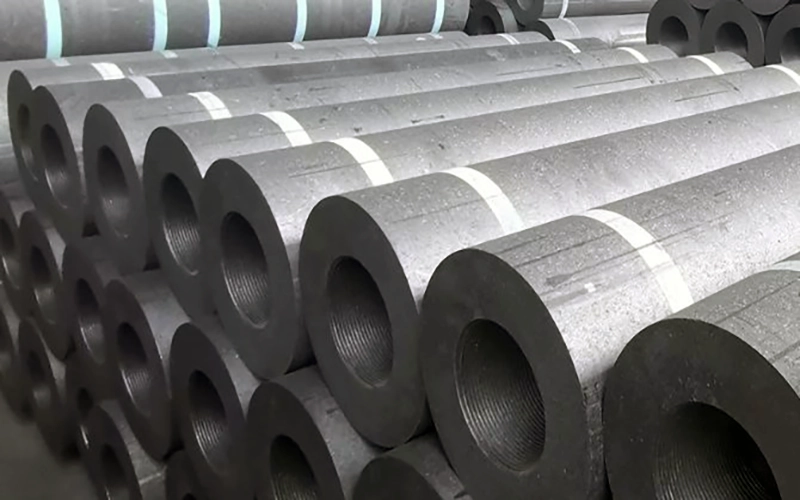
As industries strive for more sustainable and efficient technologies, the role of EAFS and, by extension, graphite electrodes, is expected to expand. EAFS are more environmentally friendly compared to traditional blast furnaces, as they rely on recycled scrap and emit fewer greenhouse gases.
However, the graphite electrode market is subject to fluctuations due to raw material availability, global steel production levels, and trade policies. As demand increases, especially in countries emphasising electric steel production, the importance of maintaining a stable and sustainable supply chain for graphite electrodes becomes ever more crucial. With technological advances and a global push for greener practices, graphite electrodes will continue to play a central role in modern metallurgy.
Graphite electrodes carry the electricity that melts scrap iron and steel. An increasing proportion of global steel is made using electric arc furnaces, and the electric arc furnace itself is getting more efficient and making more steel per tonne of electrode.
| Nominal Diameter | Nominal Diameter | min.diameter | Max.diameter | Available throughout |
|---|---|---|---|---|
| mm | inch | mm | mm | mm |
| 250 | 10 | 252 | 256 | 1800-1500 |
| 300 | 12 | 303 | 15 | 1800-1500 |
| 350 | 14 | 354 | 359 | 1800-1500 |
| 400 | 16 | 404 | 410 | 1800-1500 |
| 450 | 18 | 454 | 460 | 2400-2100-1800 |
| 500 | 20 | 506 | 510 | 2400-2100-1800 |
| 550 | 22 | 556 | 562 | 2400-2100-1800 |
| 600 | 24 | 607 | 613 | 2700-2400-2100 |
| Nominal Diameter | Nominal Diameter | Tolerances |
|---|---|---|
| mm | inch | mm |
| 252 | 10 | 1500 |
| 303 | 12 | 1800 |
| 354 | 14 | 2400 |
| 400 | 16 | 2400 |

